
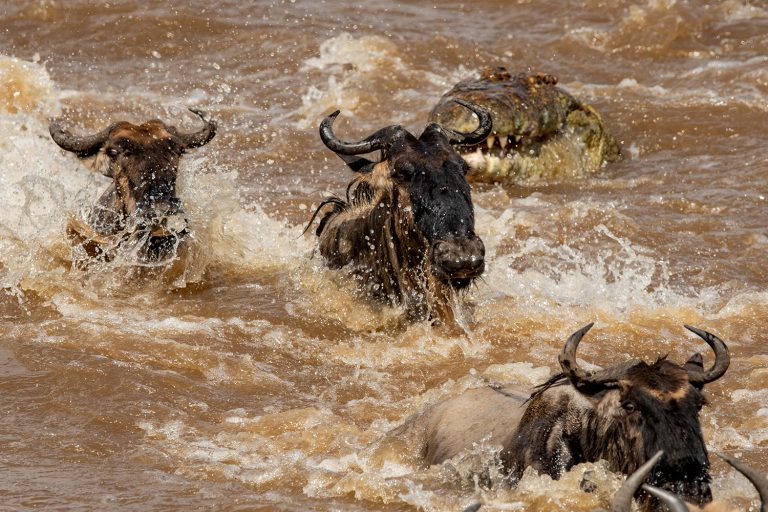
What the Migration Really Is? People picture a single event. One dramatic crossing, wildebeest launching into churning water, crocodiles surging up. That scene exists. But the Great Migration in Kenya is actually a year-round circuit — 1.5 million wildebeest plus hundreds of thousands of zebras and Thomson’s gazelles moving in a rough clockwise loop between Tanzania and Kenya, following rainfall and fresh grass.
The Kenyan leg, centered on the Masai Mara National Reserve, typically gets the herds from late June through November. River crossings at the Mara River are what most visitors come for. But the migration isn’t a scheduled event. The herds don’t follow a timetable. That’s the first thing to get your head around.
When to Go — It’s Complicated
July through October is the standard answer for river crossings. That’s mostly right. But the variation within those four months is significant. Late July through September tends to produce the highest crossing frequency, particularly in the Mara Triangle — the western section of the reserve managed by the Mara Conservancy, separate from the main reserve. Fewer vehicles, better sight lines, and in my experience, calmer mornings.
Peak Season vs. Shoulder Season
August is peak. Camps are full, crossing points get crowded, and prices reflect that. If you can go in late September or early October, you’ll likely still catch crossings with noticeably fewer visitors competing for position. The herds don’t thin out that quickly.
One thing I didn’t know before going: wildebeest calving season happens in January and February down in the Serengeti. If you can’t make it during crossing season, that period is spectacular in a completely different way — thousands of newborns in the first weeks of life, predators active, the whole food chain visible and immediate. It doesn’t get marketed as heavily as the crossings but it probably should.
River Crossings: The Reality
Here’s the part the brochures leave out. The wildebeest regularly abort crossings. Completely. Five hundred animals will surge to the bank, pause, mill around in apparent confusion for 20 minutes, then turn and sprint back the way they came. It happens constantly. It’s maddening if you’ve waited three hours. It’s also darkly funny once you accept you’re not in control of any of this.
Crocodiles give better signals than most guides will admit publicly. Experienced guides watch croc behavior — specifically when large crocs start positioning themselves mid-river rather than on the banks. That shift often precedes a crossing. Not always. But it’s a better indicator than tourist reports from crossing points upstream.
The classic crossing spots — Serena, the Sand River crossings, Lookout Hill area — are popular because they’re consistently accessible. The herds, however, don’t consult maps. Fresh tracks and the smell of fresh dung near the bank are more reliable real-time signals than any fixed schedule. Ask your guide in the morning, not the night before.
Vehicle numbers at crossings matter enormously. Watching from a cluster of 35 Land Cruisers is a fundamentally different experience than watching from four. The Mara Triangle and some of the conservancies adjoining the main reserve — Olare Motorogi, Naboisho — have vehicle limits at sightings that the main reserve doesn’t enforce as strictly.
What I Got Wrong
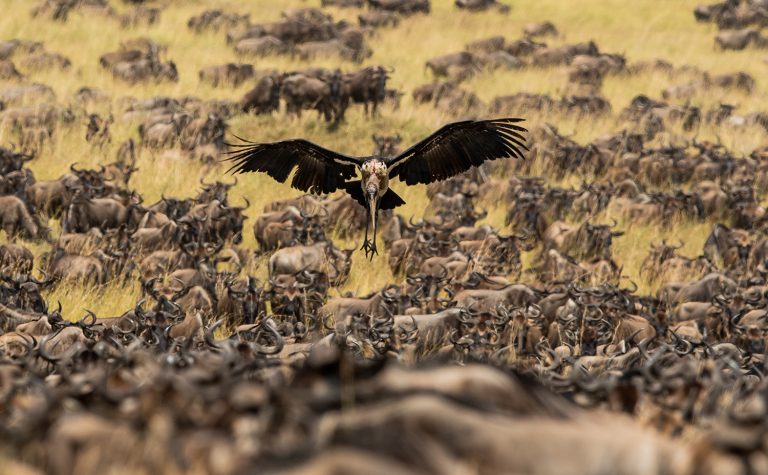
I booked three nights in October and spent most of my mental energy on crossing logistics. I missed the columns. That’s the thing — driving through the Mara and seeing a column of wildebeest stretching across the plain for five kilometers, dust rising in the afternoon, the whole herd moving with this collective, unstoppable momentum — that affected me more than any crossing did. Nobody had really described it. I wasn’t looking for it. It just appeared.
Also: I wasn’t prepared for how cold it gets before dawn. Mid-July to August in the Mara, pre-dawn, sits around 11–13°C (52–55°F) with wind. Not slightly chilly. Actually cold. Pack a proper fleece, not a light layer. I spent my first game drive shivering in a linen shirt like an idiot.
Three nights was not enough. By day two I’d started to understand the landscape — where the herds tended to be at which time of day, which ridges offered the long views. Then it ended. If you can do five nights, do five nights.
Nairobi National Park: Worth Knowing About
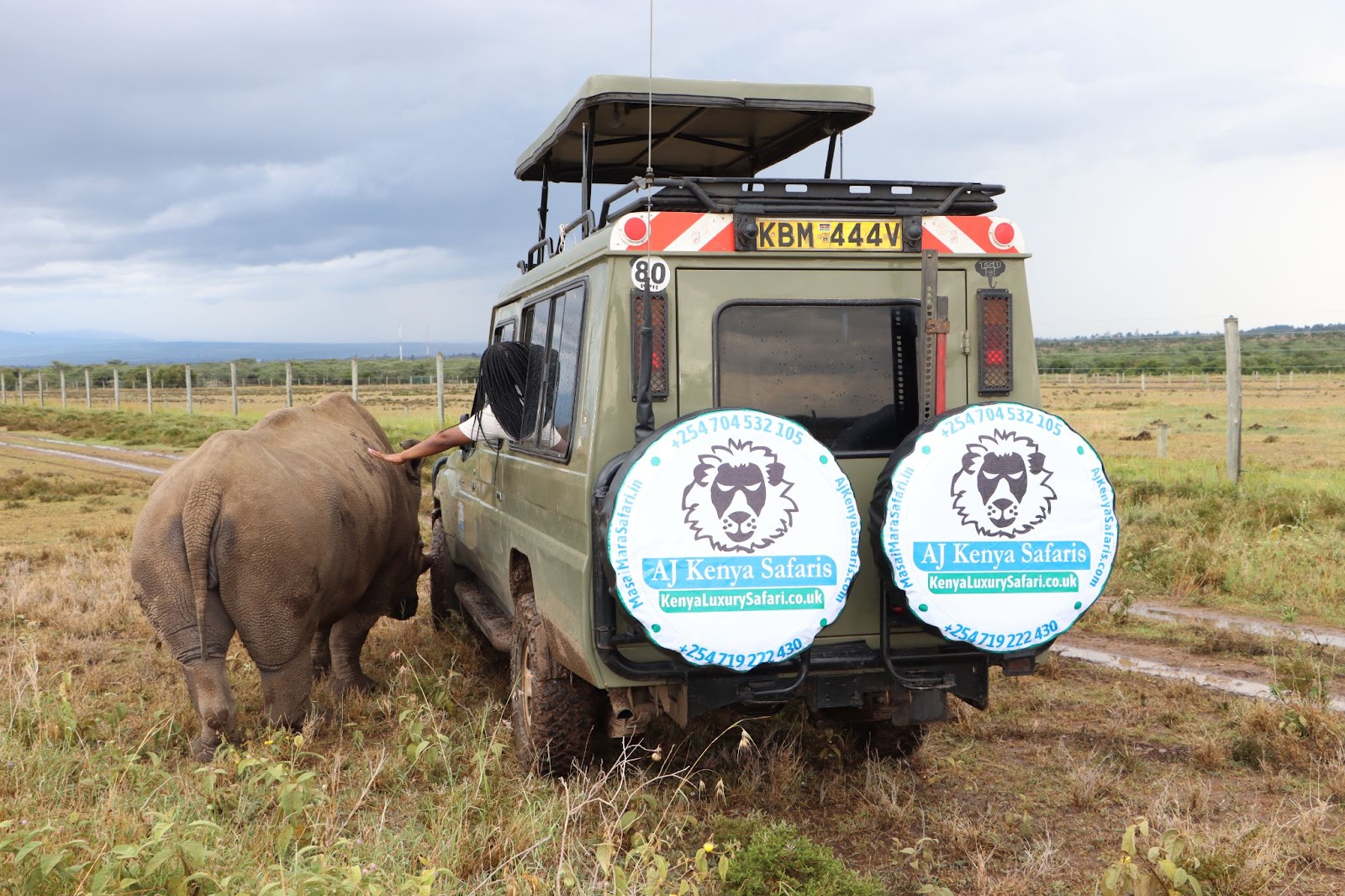
If you’re passing through Nairobi National Park on your way into the country, don’t dismiss it as a consolation prize. Seven kilometers from the city center, with lions, black rhinos, buffalo, and giraffe against an urban skyline. It’s genuinely strange and worth a half-day. You won’t see the migration there, but it’s a solid orientation to Kenyan wildlife before you head south.
Non-resident entry fees are currently $80 per person per day (2026 KWS rates), paid through the updated portal at ecitizen. Don’t use the old KWS ecitizen link — it’s no longer active for payments.
Costs and Park Fees
Masai Mara non-resident fees run $100 per person per day in low season, rising to $200 per day during peak season — which overlaps almost exactly with the river crossing window. That’s the trade-off.
Mid-range tented camp packages during peak season typically run $450–$800 per person per night all-inclusive. Budget options exist for less. Luxury camps push well above that. masaimara.co.ke has a solid breakdown of camps across price tiers if you want to compare what you actually get at each level.
Flying from Nairobi’s Wilson Airport costs roughly $200–$250 each way. The road from Nairobi takes 5–6 hours on a good day, longer through Narok if market traffic is bad. For a short trip, fly. For anything five nights or more, the drive gives you a sense of scale that flying doesn’t.
For migration-specific packages structured around timing, masaimarasafari.travel and ajkenyasafaris.com both offer itineraries built around the seasonal windows — worth looking at if you want the planning taken off your plate.
Final Thoughts
The Great Migration in Kenya delivers. But it delivers on its own terms, not yours. The people who come back talking about it like it changed something in them are mostly the ones who gave it enough time and showed up without a rigid script.
The ones who don’t are usually the ones who booked two nights, expected a crossing on day one, and spent the whole trip staring at a river that didn’t perform.
Go longer. Pack warmer than you think. And let go of the checklist. The Mara has better ideas than you do.
