
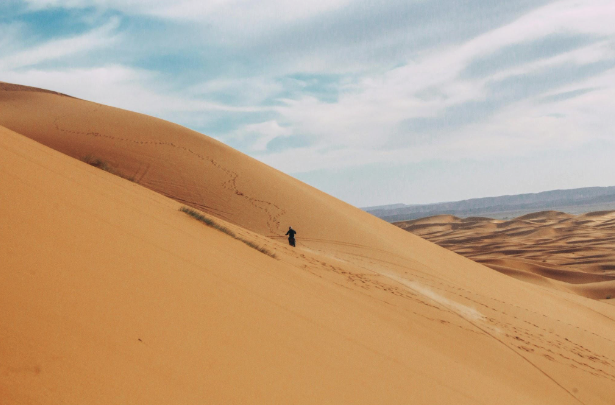
It’s one of those parts of the world that many people would love to visit, but relatively few will actually get a chance to. Nonetheless, if you are planning a trip to the Sahara, there is a lot that you might want to bear in mind to help you with it. The truth is that there are many approaches you can consider in planning such a trip. In this post, we are going to take a look at some of the things that you might need to know if you are visiting the Sahara for the first time.
Choosing Your Gateway
Most travellers heading into the Moroccan Sahara default to Merzouga, largely because it’s the most photographed and easiest to access. The Erg Chebbi dunes there are undeniably beautiful. You’ll find plenty of camps, camel treks, and relatively straightforward logistics. But ease comes with a trade-off. Merzouga can feel curated, even busy in peak seasons, with convoys of 4x4s and clusters of camps that, while comfortable, dilute that sense of isolation many people are actually seeking. So when it comes to choosing between Merzouga and M’hamid, you may decide to try the latter – especially if you’re after something quieter, something that feels closer to the idea of the Sahara rather than the brochure version.
Timing Your Visit
The Sahara is not forgiving when it comes to temperature. In summer, daytime heat regularly pushes beyond 40°C, which turns even simple activities into endurance tests. Winter, on the other hand, brings cooler days but surprisingly cold nights, often dropping close to freezing. The most comfortable windows tend to be spring and autumn. During these months, the days are warm without being oppressive, and the nights are cool enough to make a campfire feel earned rather than necessary.
Getting There: The Journey Is Part of It
Reaching the Sahara is not a quick hop. Whether you’re heading to Merzouga or M’hamid, expect a long overland journey, often from cities like Marrakech. The drive itself is a shifting sequence of landscapes – mountains, valleys, kasbahs, and eventually, the slow thinning out into something more elemental. This transition matters. It prepares you. By the time you reach the edge of the desert, you’ve already begun to shed some of the pace and noise you arrived with.
What to Pack (and What Not To)
The instinct is often to overpack, but the desert rewards restraint. Light, breathable clothing is essential for daytime, ideally in neutral colours that reflect sunlight. Layers are equally important – temperatures drop quickly after sunset, and the cold can feel sharper than expected. A scarf or shemagh is more than aesthetic; it protects against sun and sand. Sunglasses and high-SPF sunscreen are non-negotiable. Water, obviously, but also electrolytes – hydration isn’t just about volume. What you don’t need is excess. The desert has a way of making unnecessary things feel particularly unnecessary. A small, well-considered kit will serve you far better than a heavy, overthought one.
