
Everest Base Camp Trek is an exciting adventure that rewards you with the incredible scenery of the Himalayan vistas. During this exhilarating journey, you will be in some of the most scenic places of the Everest region.
The standard itinerary of this trek takes about 14 days. While the trek is rewarding, it requires you to dedicate a considerable amount of time. Also, to reach the base camp of Everest, you have to trek for almost six days. You will have to navigate through several sections that are steep and return again which can be time-consuming and tiring, as a journey on foot takes a lot of physical effort.
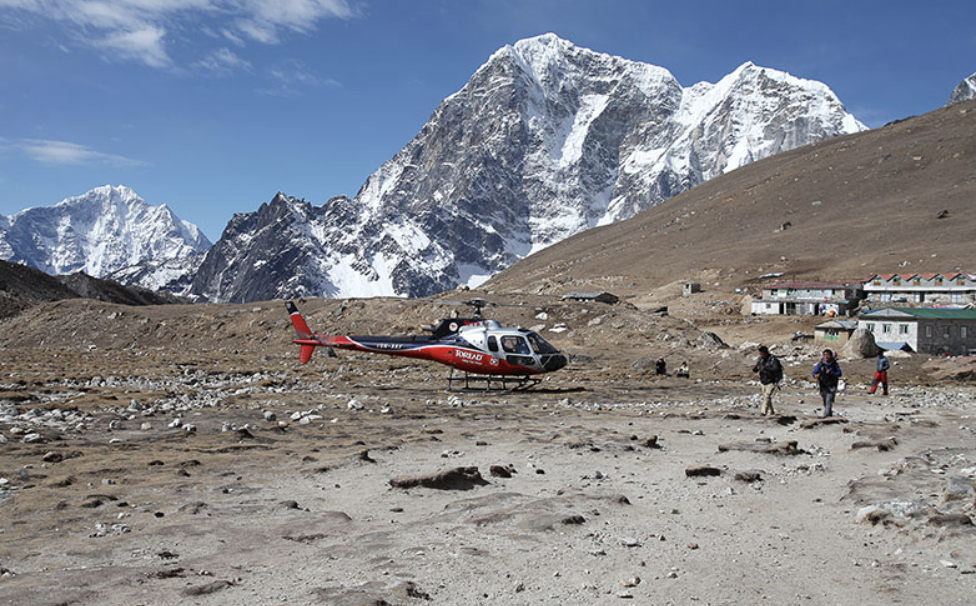
However, if you choose the Everest Base Camp Trek with helicopter return, you can skip the return trek on foot and complete this adventure in just 9 days. This option is an ideal way to visit the base camp of Everest in a shorter time while also not missing any special highlights of the region.
A helicopter return option provides a special and unique touch and is also a main attraction of this itinerary. Instead of retracing your steps, you will have the opportunity to enjoy a breathtaking bird’s eye view of the Himalayan range while comfortably flying back by a helicopter.
This alternative is ideal for trekkers looking for a quick, comfortable and luxurious way to return to the city after exploring the scenic trails of the Everest region on foot.
Best Time for Everest Base Camp Trek with Helicopter Return
The best time for the Everest Base Camp Helicopter return is during Spring and Autumn. During these peak trekking and exploration periods, the weather is moderate, and temperatures are comfortable for navigating.
The helicopter return flights are also operated smoothly in these ideal seasons. The climatic conditions and visibility during the autumn and spring months are excellent. So, helicopter flights can be operated smoothly as the likelihood of weather-related obstructions is also low.
For the best experience, it is highly recommended to undertake this adventure during autumn and spring months.
Spring (March to May)
Spring is known for offering a vibrant atmosphere. At this time the trails of the Everest region are decorated with blooming rhododendrons and many other colourful wild flowers.
The sky is also clear and cloud-free, rewarding you with stunning views of the Himalayan ranges. During this season, the pathways are also dry, which ensures you have a smooth traversing experience.
The long daylight hours of this season let you explore the scenic vistas from your comfortable place. You will be able to stop at popular viewpoints, enjoy the scenery, and still reach your destination at the exact intended time.
Likewise, the weather is calm and stable in the spring months, which makes operating helicopter flights easy and exactly on time.
Autumn (September to November)
Another good time for trekking in Nepal is Autumn. This season comes after the monsoon period from September to November. At this time, the rain washes out any haze or pollution in the atmosphere making the skies bright blue and clear.
The autumn air is cool and refreshing. Because the absence of dust and dirt makes visibility clear, rewarding you with great views of the Himalayas.
The weather in autumn is stable and pleasant. The likelihood of rain is less frequent in autumn. So, trekking paths are dry and can be easily navigated. The air in the Himalayan region during autumn is crisp, so you will get to trek while enjoying the refreshing ambiance
This season is also renowned for offering the best views of the Himalayan vistas and the photography trek. Because of the ideal weather conditions, the helicopter flights can also be done smoothly, which makes the overall experience comfortable, smooth and truly unforgettable.
From Trails to Skies: The Journey Overview
This journey starts with thrilling flight from Kathmandu to Lukla. The trek from Lukla is initially easy and leads in the direction of Phakding along the Dudh Koshi River. Afterwards, on the following day, trail brings you to Namche Bazaar. It is a bustling Sherpa village and also a popular point for acclimatization.
For the next three days, your stops are Tengboche, Dingboche and Lobuche. These are popular stops during the EBC trek. They are renowned for offering beautiful mountain scenery. Finally, you will then leave Lobuche and reach Gorakshep. It is the last settlement before Everest Base Camp with beautiful glaciers and high mountains surrounding it.
From Gorakshep, you will hike to the Everest Base Camp. Then, on the next day, you will enjoy a morning hike to Kala Patthar, see a beautiful sunrise and get back to Gorakshep which marks the completion of your journey on foot. Instead of walking back on the same path, you will fly back to Kathmandu in a lot more comfortable and scenic way-by helicopter.
The helicopter return option blends the classic trekking experience with a rewarding and luxurious conclusion, letting you enjoy the adventure from trails to skies.
Tips for a Smooth Everest Base Camp with Helicopter Return
- Train for the trek including strength and cardio exercises for a smooth experience on trails.
- Stay hydrated.
- Follow acclimatization schedule listed in your itinerary.
- Listen carefully to safety briefings.
- Pack light. Know about the luggage restrictions.
- Fasten your seat belt throughout the helicopter flight.
- Enter and exit the helicopter only after getting signal from the pilot.
- Be aware of the emergency exit.
- Stay calm and if you experience any kind of discomfort during the flight inform the pilot immediately.
